


Shopify DotDev 2026: Lessons for Agentic Commerce
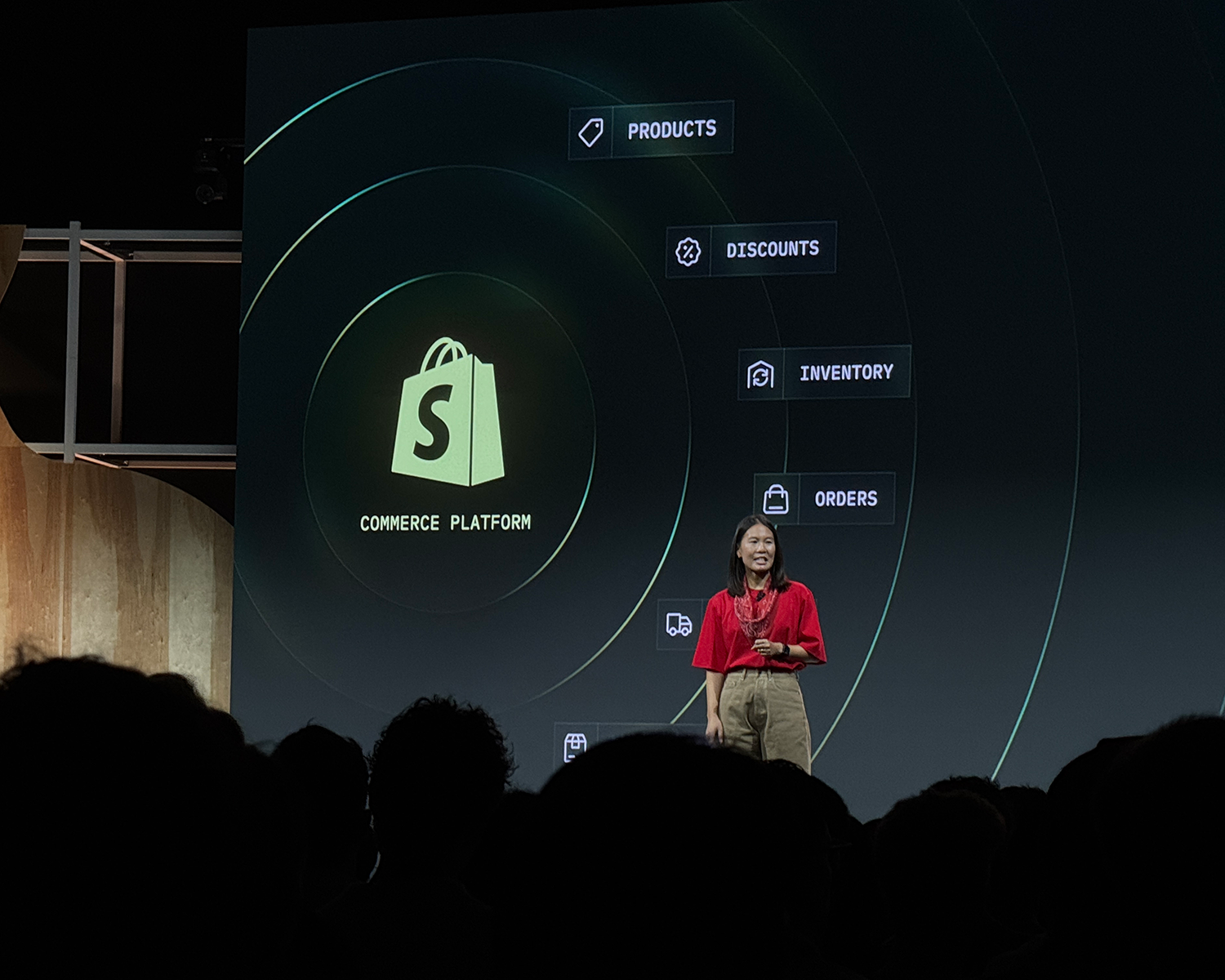
Two days, 2,000 partners, one clear signal. Our team's takeaways from DotDev 2026 in Toronto.
Shopify held its annual DotDev in Toronto in July, two days with more than 2,000 partners from close to 70 countries. The energy the entrepreneur-heavy partner ecosystem brings is unrivalled, and what stands out in the room is how willingly this community shares what it has learned, including the parts that did not work.
The news was incremental rather than headlines. The big launches had already landed in the June Edition, five weeks earlier. What came through instead was a clear read on where Shopify believes commerce infrastructure is going, and what retailers need in place to be ready for it.
The biggest of those signals is the Universal Commerce Protocol. Shopify and Google started it in January, and it is now governed by a sixteen-member council. Every other announcement improves some part of how a store gets built or run. UCP changes where the buying journey happens. An AI agent can find products, sign a shopper in, build a cart, start a checkout and follow the order afterwards, all through a shared standard rather than through your storefront. Some of your customers will complete a purchase without ever opening your site.
That reframes what product data is for. It stopped being page content written for a person to read and became structured information that an AI system reads directly and acts on. If an agent looks for a product with an attribute you have never recorded, you are not ranked lower. You are not there at all. Nobody needs to rebuild their architecture next quarter, but the quality of your product data has moved from a merchandising task to a commercial one.
Product data is now the conversion lever
Shopify's Global Catalog is product-native search infrastructure: structured, enriched data across billions of products with live price and inventory. Recommendations that use it perform twice as well as those that do not. It clusters duplicate listings so one item stops competing with itself, and fills gaps in category, gender and age, but only where the information exists somewhere first. The retailer is still the source of truth.
Shopify is also classifying products on softer attributes: formalness, occasion, comfort. Be careful how much you leave to inference. The text re-rankers in most retrieval stacks never look at your images, and OpenAI's product feed specification treats imagery as a trust signal rather than a ranking one. Google's shopping surfaces do read images, but you cannot count on it. If the drape of a shirt matters to the sale, someone has to write it down. Thin product copy is now a discoverability problem, not only a conversion one.

Three things decide whether AI can see you
⚫️ Comprehension. Most AI crawlers render JavaScript poorly. Product copy, structured data, reviews and FAQs need to exist server-side or they are invisible.
⚫️ Authority. Brand mentions and community consensus feed recommendations. Reddit reportedly accounts for around 13% of ChatGPT citations, per Semrush.
⚫️ Accessibility. Geo-redirects and bot-blocking apps quietly lock out the crawlers you want.
Very little of this is a rebuild. Most of it is hygiene that has never had a commercial reason attached to it before.
Liquid came back, and headless became the exception
Session after session came back to the same advice: default to Liquid unless there is a real multi-channel, multi-region or mobile app requirement. Headless failed teams who did not have the infrastructure behind it, and templates and standardisation were praised for the same reason agents reason better over predictable structures. The economics are shifting as coding agents absorb much of what made custom frontends expensive, but headless still carries more architectural responsibility. Choose Liquid unless you can name the requirement that justifies the alternative.
Integrations are getting quieter too. Shopify is replacing broad webhooks with subscriptions to specific changes, cutting the noise by 90 to 95%, rolling out through 2026. Anyone with a busy integration layer should be testing early rather than migrating under pressure.
The maths on moving has changed
Shopify Payments runs an authorisation rate 2.43% above the next best provider on the platform. Shop Pay has more than 250 million shoppers and can lift conversion by up to 50% against guest checkout, with the button alone worth around 5% on product pages.
For a retailer sitting on a legacy platform and stuck on the business case, that uplift can fund the replatform itself. The question stops being what the move costs and starts being what staying still costs.
Last words
Competitive advantage over the next few years will not come from bolting AI features onto an existing storefront. It will come from running a commerce system that both people and AI can understand and act on: product data complete enough for an agent to trust, and business rules that live at platform level rather than in the frontend
The advantage does not go to whoever ships fastest. It goes to whoever has the clearest view of what to ship.
We built our AI Agentic Readiness Tool on this thinking before DotDev, and the event further validated our direction. It scans a store and scores whether an agent can understand it, trust it and transact with it, benchmarked against more than a thousand global retailers.
Scan your store, or talk to us about what agentic commerce means for your storefront, your content and your platform roadmap.